Technology Behind Delivery

Exploring the technological systems and tools that enable modern delivery operations

Technology and routing systems

The Role of Technology in Delivery Operations

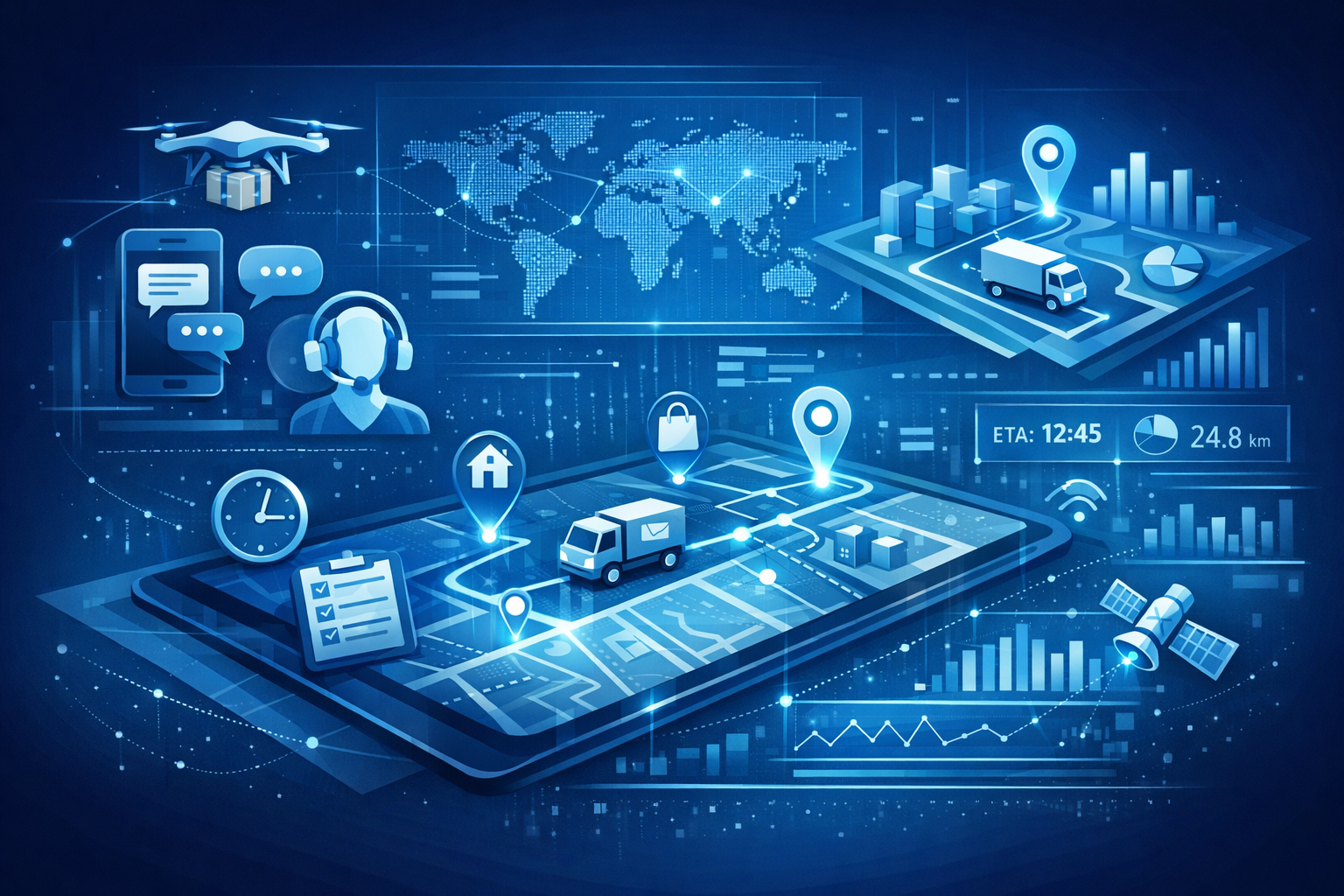
Modern delivery operations rely on sophisticated technological systems to coordinate complex logistics, maintain communication, and optimize efficiency. These systems integrate various functions to create seamless operations from order receipt to final delivery.

Digital routing interface Communication systems

Navigation Tools and Systems

Navigation technology forms the backbone of delivery operations, enabling drivers to efficiently locate addresses and optimize routes. These systems have evolved significantly with advances in mapping technology and real-time data availability.

πŸ—ΊοΈ

Digital Mapping

Comprehensive digital maps provide detailed information about road networks, traffic patterns, and geographic features. These maps are continuously updated to reflect changes in infrastructure, new developments, and temporary road closures. Accurate mapping is essential for reliable navigation and efficient routing.
πŸ“

GPS Technology

Global Positioning System (GPS) technology enables precise location tracking for both delivery vehicles and customer addresses. This technology provides real-time position data that supports navigation, tracking, and coordination functions. GPS accuracy has improved significantly, enabling more reliable delivery operations.

πŸ”„

Real-Time Traffic Data

Navigation systems incorporate real-time traffic information to identify congestion, accidents, and other delays. This data enables dynamic route adjustments that help drivers avoid problem areas and maintain efficient travel times. Traffic data is gathered from multiple sources including sensors, user reports, and historical patterns.

πŸ“±

Turn-by-Turn Directions

Modern navigation systems provide detailed turn-by-turn directions that guide drivers through complex routes. These directions include lane guidance, speed limits, and upcoming maneuver information, reducing the cognitive load on drivers and improving navigation accuracy.

Routing Logic and Optimization

Routing algorithms represent some of the most sophisticated technology in delivery operations. These systems analyze multiple variables to determine the most efficient delivery sequences and routes.

Route Optimization Principles

Route optimization visualization

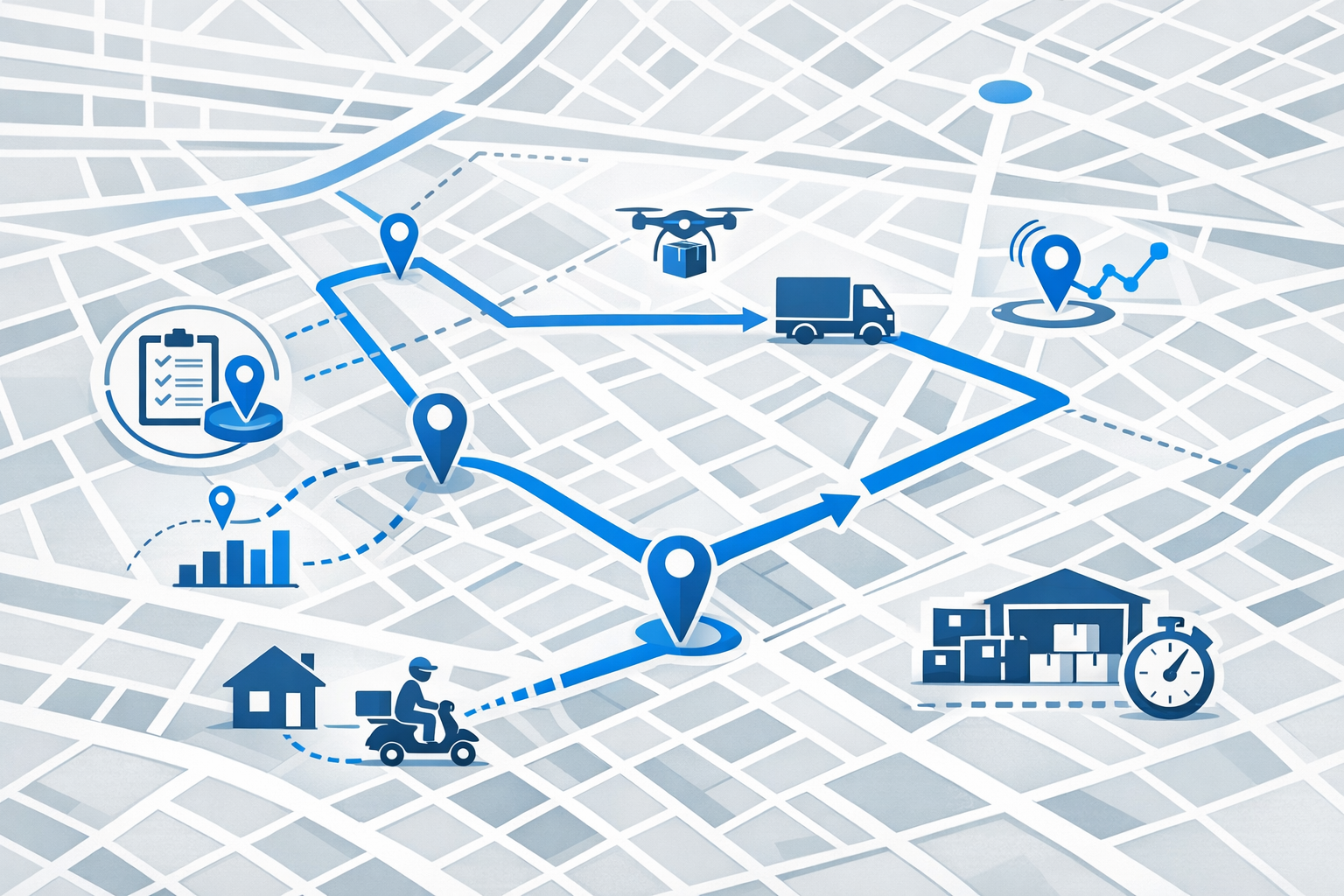
Advanced algorithms consider multiple factors to create efficient delivery routes that minimize time and distance while meeting service requirements.

Multi-Stop Routing

When drivers have multiple deliveries, routing systems determine the optimal sequence to minimize total travel time and distance. This complex calculation considers the location of each stop, traffic conditions between points, and time windows for deliveries. The goal is to create efficient routes that serve all customers promptly.

Dynamic Adjustment

Routing systems continuously monitor conditions and can adjust routes in real-time when unexpected delays occur. This flexibility enables operations to respond to traffic accidents, road closures, or other disruptions without completely replanning entire routes. Dynamic adjustment helps maintain efficiency despite changing conditions.

Capacity Balancing

Routing algorithms also consider driver capacity and workload distribution. By balancing assignments across available drivers, operations can optimize overall efficiency and prevent individual drivers from becoming overwhelmed. This balancing act requires sophisticated analysis of multiple variables simultaneously.

Communication Systems

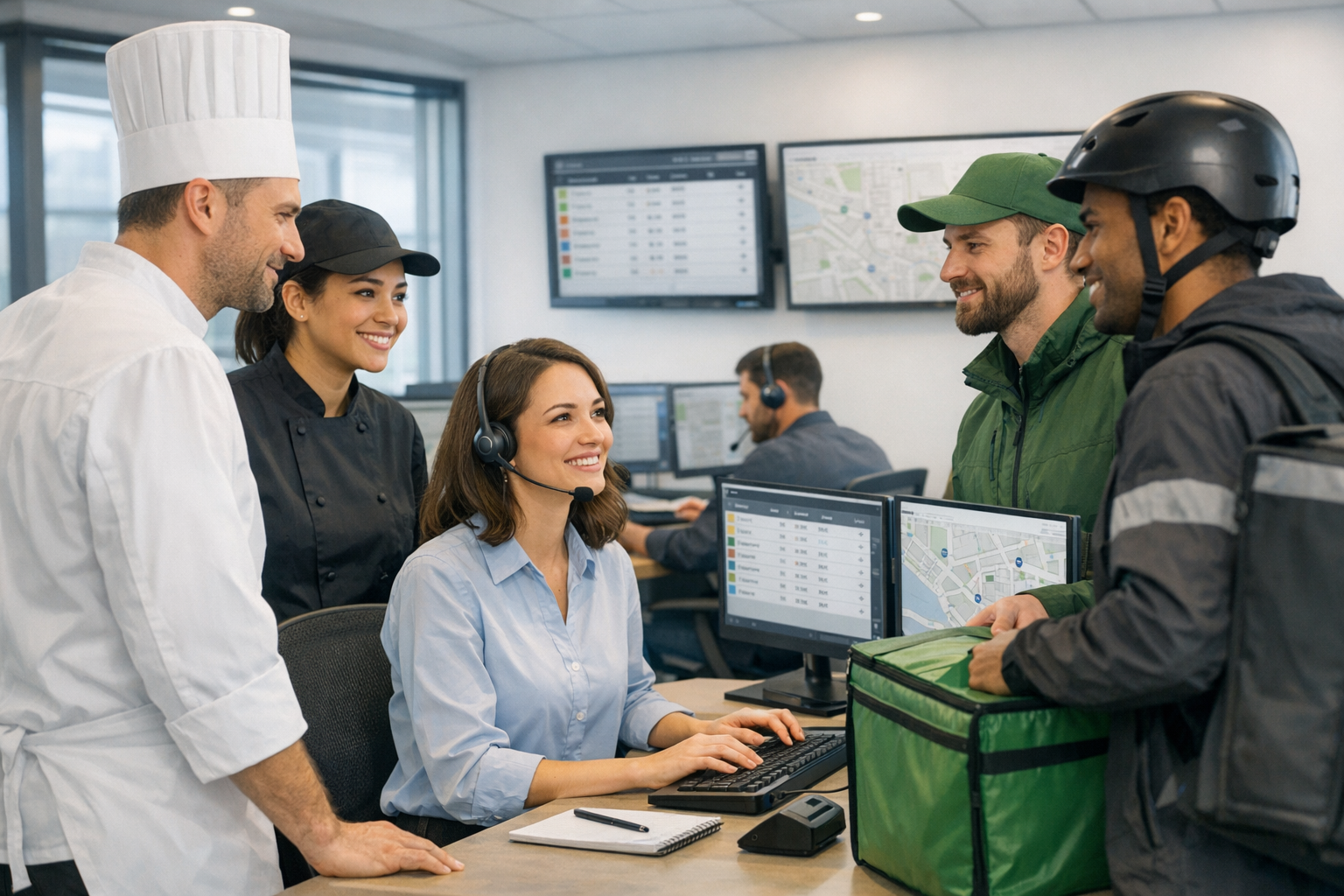
Effective communication between kitchen staff, dispatch personnel, and delivery drivers is essential for smooth operations. Technology enables real-time information sharing and coordination across all parts of the delivery process.

Communication workflow Digital coordination
πŸ“²

Mobile Communication Devices

Delivery drivers use mobile devices to receive assignments, access navigation, and communicate with dispatch. These devices provide the primary interface for drivers to interact with the delivery system and receive updates. Mobile technology has revolutionized delivery operations by enabling constant connectivity.

πŸ’¬

Instant Messaging

Text-based messaging systems enable quick communication between drivers and dispatch without requiring phone calls. This efficient communication method allows for rapid exchange of information about order status, delivery issues, or route changes. Messaging systems maintain communication logs for reference and analysis.

πŸ””

Automated Notifications

Systems automatically generate notifications for important events such as order assignments, delivery confirmations, and status updates. These automated communications ensure that all parties receive timely information without requiring manual intervention. Notifications can be delivered through multiple channels including mobile apps, text messages, and email.

πŸ“ž

Voice Communication

While digital communication handles most routine interactions, voice communication remains important for complex situations that require detailed discussion. Phone systems enable direct communication between drivers and dispatch when issues cannot be resolved through messaging alone.

Kitchen-Driver Coordination

The connection between kitchen operations and delivery drivers represents a critical coordination point in the delivery process. Technology bridges this gap by providing real-time information flow between preparation and delivery functions.

Order Status Tracking

Kitchen systems update order status in real-time as items move through preparation stages. This information is visible to dispatch and drivers, enabling accurate timing for pickup and delivery. Status tracking helps synchronize kitchen output with driver availability.

Pickup Coordination

When orders are ready for pickup, systems notify dispatch and available drivers. This notification includes order details, pickup location, and delivery information. Efficient pickup coordination minimizes wait times for drivers and ensures orders depart promptly after completion.

Quality Communication

Technology enables communication about order quality issues between kitchen and delivery personnel. If problems are identified during preparation or packaging, this information can be communicated to drivers and potentially to customers. This transparency helps manage expectations and maintain service quality.

Performance Feedback

Systems collect and analyze data about kitchen performance, including preparation times, accuracy rates, and quality metrics. This information can be shared with delivery operations to identify areas for improvement and optimize overall process efficiency.

Data Analytics and Performance Monitoring

Modern delivery operations generate vast amounts of data that can be analyzed to improve performance and identify opportunities for optimization. Analytics tools transform this data into actionable insights.

πŸ“Š

Performance Metrics

Systems track key performance indicators including delivery times, accuracy rates, customer satisfaction, and operational efficiency. These metrics provide visibility into performance trends and help identify areas requiring attention. Regular monitoring of these metrics supports continuous improvement efforts.

πŸ“ˆ

Trend Analysis

Analytics tools identify patterns in delivery data, including seasonal variations, peak demand periods, and geographic performance differences. Understanding these trends enables better planning and resource allocation. Trend analysis also helps predict future demand and prepare accordingly.

πŸ”

Problem Identification

Data analysis helps identify recurring problems or bottlenecks in the delivery process. By examining performance data across different dimensions, operations can pinpoint specific issues and develop targeted solutions. This data-driven approach leads to more effective problem-solving.

🎯

Optimization Opportunities

Advanced analytics can identify opportunities for process improvement and efficiency gains. These might include route optimization, staffing adjustments, or operational changes. Data-driven insights enable operations to make informed decisions about where to focus improvement efforts.

Future Technology Trends

Delivery technology continues to evolve rapidly, with new innovations promising to further enhance efficiency and customer experience. Understanding these trends provides insight into the future direction of delivery operations.

Autonomous Delivery Vehicles

Self-driving delivery vehicles represent an emerging technology that could transform delivery operations. These systems use advanced sensors and artificial intelligence to navigate roads and complete deliveries without human drivers. While still developing, this technology shows promise for reducing costs and increasing efficiency.

Drone Delivery

Unmanned aerial vehicles, or drones, offer potential for rapid delivery of small items over short distances. This technology faces regulatory and technical challenges but continues to advance. Drone delivery could significantly reduce delivery times for certain types of orders in suitable environments.

Artificial Intelligence

AI and machine learning technologies are increasingly being applied to delivery operations for tasks such as demand prediction, route optimization, and customer service automation. These technologies can process vast amounts of data to identify patterns and make predictions that enhance operational efficiency.

Enhanced Tracking

Advances in tracking technology provide increasingly detailed visibility into delivery progress. Real-time location updates, estimated arrival times, and delivery confirmation notifications enhance the customer experience. Future developments may include even more precise tracking and communication capabilities.